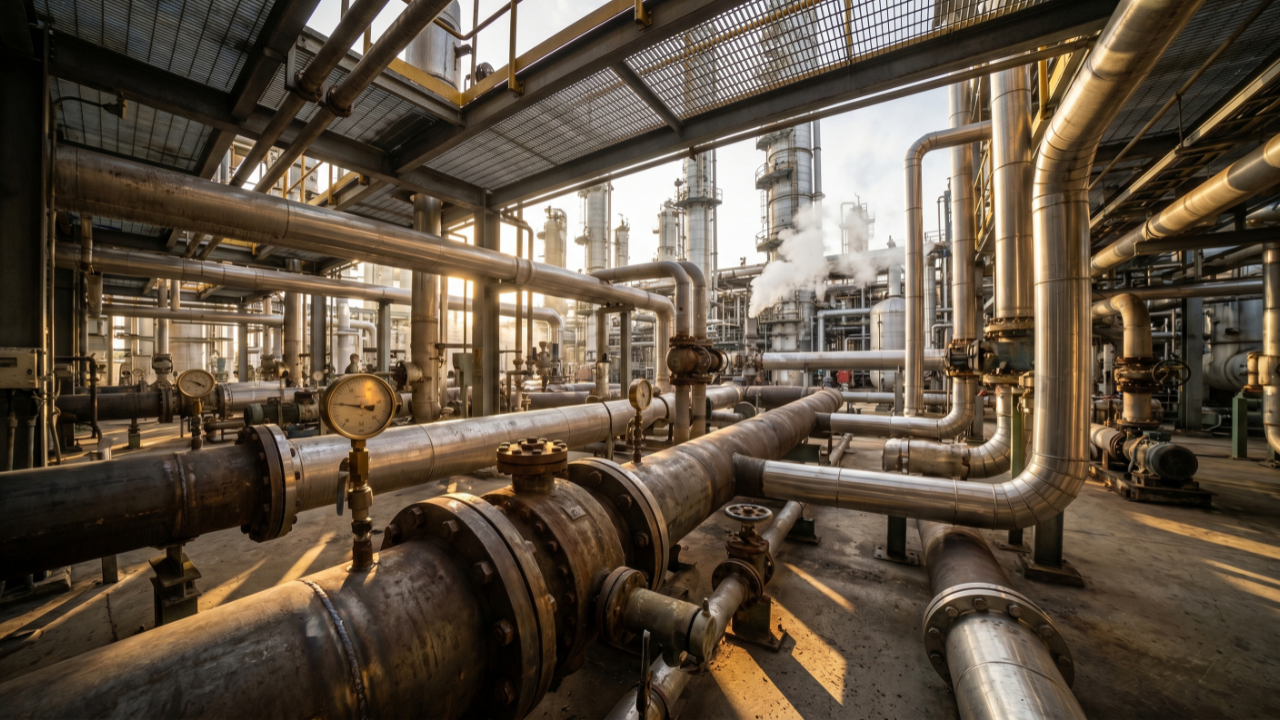
Definition of a Pipe
In industrial and mechanical engineering, a pipe is defined as a pressure-tight, hollow cylinder or tubular section used primarily to convey flowing substances—such as liquids, gases, slurries, and powders.
Unlike structural tubing or hoses, industrial piping is characterized by high rigidity, permanence, and pressure containment. It is standardized globally by its Nominal Pipe Size (NPS) or Nominal Diameter (DN), along with a “Schedule” that dictates its wall thickness.
An industrial pipe is a pressure-tight cylindrical component designed to transport liquids, gases, slurries, and other process fluids. Pipes are standardized by Nominal Pipe Size (NPS) or Nominal Diameter (DN), wall thickness (Schedule), pressure rating, and material specifications, as defined by international standards such as ASME, ASTM, API, and ISO.
In Brief
This guide explains everything engineers need to know about industrial pipes, including:
- Definition of a pipe
- Pipe vs. tube differences
- Nominal Pipe Size (NPS)
- Diameter Nominal (DN)
- Pipe Schedule and wall thickness
- Pipe materials
- International engineering standards
- Design pressure
- Design temperature
- Corrosion allowance
- Manufacturing methods
- Industrial applications
- Inspection and testing
- Pipe selection guidelines
Key Engineering Facts
| Topic | Summary |
| Primary Function | Transport liquids, gases, slurries, steam, and chemicals |
| Size Standard | Nominal Pipe Size (NPS) / Diameter Nominal (DN) |
| Wall Thickness | Pipe Schedule (SCH 10, 20, 40, 80, 160, XXS, etc.) |
| Major Standards | ASME B31.3, ASME B36.10M, ASME B36.19M, API 5L |
| Common Materials | Carbon Steel, Stainless Steel, Alloy Steel, Duplex Stainless Steel, PVC, HDPE |
| Typical Industries | Oil & Gas, Petrochemical, LNG, Power Plants, Chemical Processing, Water Treatment |
| Design Factors | Pressure, Temperature, Corrosion, Fluid Service, Mechanical Loads |
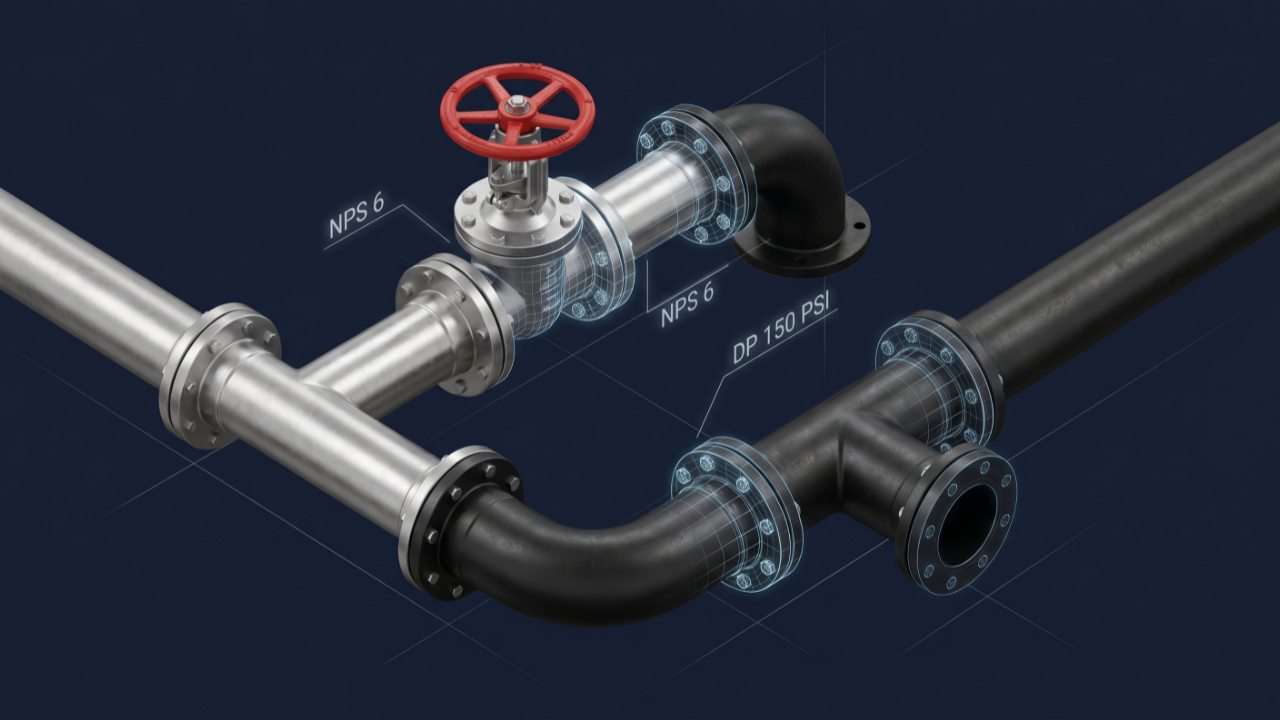
Standardized Engineering Definitions
Several major international codes govern the design, materials, and definition of industrial pipes:
- ASME B31.3 (Process Piping): This code defines “piping” comprehensively as assemblies of piping components used to convey, distribute, mix, separate, discharge, meter, control, or snub fluid flows. It encompasses the pipe itself, along with supporting elements, flanges, bolting, gaskets, valves, and pressure-relieving devices typically found in refineries and chemical plants.
- ASME B36.10M & B36.19M: These standards define the specific dimensions, weights, and materials for welded and seamless wrought carbon steel pipe and stainless steel pipe, respectively. They establish the standardized NPS and Schedule numbers used for pressure calculations.
- API Specification 5L: The American Petroleum Institute defines line pipe specifically for use in conveying gas, water, and oil in the natural gas and petroleum industries. API standards place heavy emphasis on yield strength (e.g., API 5L Grade X65) and fracture toughness in high-stress pipeline environments.
- EN 13480 (Metallic Industrial Piping): The European standard equivalent that defines the requirements for industrial piping systems and supports, focusing on safety and pressure containment across various European regulatory frameworks.
Pipe vs. Tube: The Industrial Distinction
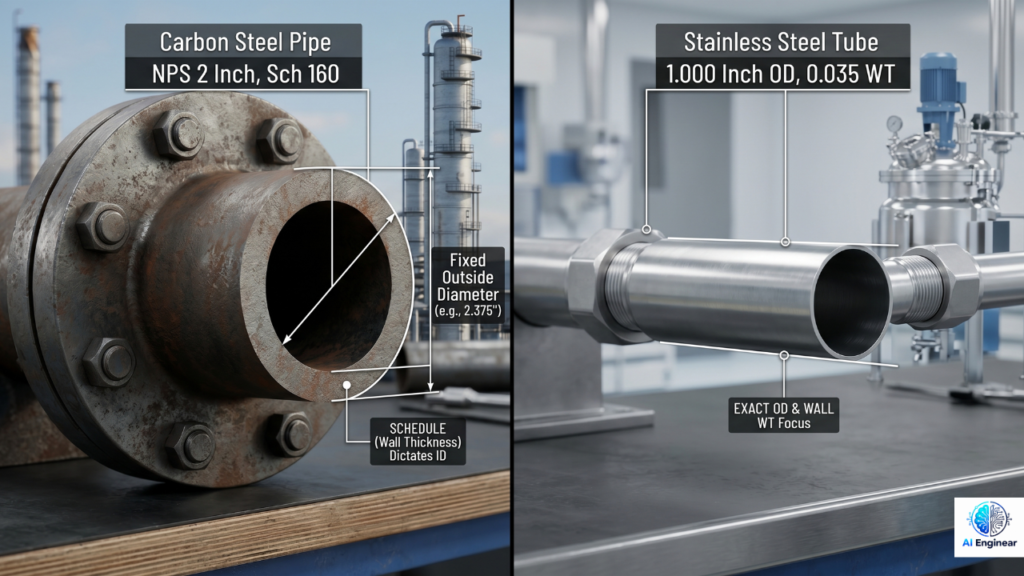
A critical distinction in industrial engineering is the difference between a pipe and a tube:
- Pipe: Identified by its Nominal Pipe Size (NPS), which represents an approximate inside diameter (for sizes up to 12 inches), and a Schedule for wall thickness. Pipes are generally used for mass fluid transport over distances or throughout a facility.
- Tube: Identified by its exact Outside Diameter (OD) and a specific wall thickness (often measured in BWG or thousandths of an inch). Tubes are primarily used in structural applications, heat exchangers, instrumentation lines, and machinery interconnects.
Key Functional Parameters
When specifying a pipe for a rigorous industrial application (such as those tied to ASME VIII for pressure vessels or API RP 14E for offshore production), engineers evaluate several core variables to ensure mechanical integrity:
- Design Pressure ($P$): The maximum internal or external pressure the pipe is rated to safely contain.
- Design Temperature ($T$): The maximum and minimum thermal limits the material can withstand before losing structural strength or becoming brittle.
- Corrosion Allowance: A calculated amount of extra wall thickness added to the base structural requirement to account for material degradation over the pipe’s lifecycle.
The Anatomy of an Industrial Pipe
Walk into any refinery, chemical plant, or offshore platform, and you are immediately surrounded by thousands of miles of piping. But in the engineering world, a pipe is much more than just a hollow cylinder. It is a highly engineered pressure-containment vessel designed to transport liquids, gases, slurries, and even hazardous chemicals safely across vast distances and extreme environments.
Unlike standard commercial plumbing, industrial piping implies permanence, rigidity, and strict adherence to global safety codes.
Pipe vs. Tube: Clearing Up the Confusion
One of the most common questions from junior engineers and procurement teams is the difference between a pipe and a tube. While they look similar, their engineering applications and sizing conventions are completely different.
- Pipes: Used primarily for the mass transport of fluids. A pipe is identified by its Nominal Pipe Size (NPS)—which is a dimensionless designator that roughly corresponds to the inside diameter for smaller sizes—and a Schedule that dictates its wall thickness.
- Tubes: Used structurally or for heat transfer (like in heat exchangers and boilers). Tubes are measured by their exact Outside Diameter (OD) and a specific wall thickness, often measured in fractions of an inch or Birmingham Wire Gauge (BWG).
If you are calculating flow rates and pressure drops across a facility, you are working with pipes. If you are routing instrumentation lines or designing structural supports, you are likely looking at tubes.
Core International Standards
Industrial piping systems aren’t designed by guesswork; they are strictly governed by international codes that ensure mechanical integrity. Here are the heavy hitters you need to know:
- ASME B31.3 (Process Piping): The undisputed bible for refineries and chemical plants. It dictates the design, materials, fabrication, and testing of piping systems that handle everything from benign water to highly volatile hydrocarbons.
- API Specification 5L: Developed by the American Petroleum Institute, this standard covers seamless and welded steel line pipe. If you are transporting oil or natural gas across a country, API 5L grades (such as X60 or X65) are the standard, with a strong focus on yield strength and fracture toughness.
- ASME B36.10M & B36.19M: These are your dimensional standards. They standardize the NPS and Schedule numbers for carbon steel and stainless steel pipes, ensuring a 6-inch Schedule 40 pipe manufactured in Texas fits perfectly with a flange forged in Germany.
- EN 13480: The European standard for metallic industrial piping, serving a similar function to ASME B31.3 but tailored to the European Pressure Equipment Directive (PED).
Engineering the Perfect Pipe: Key Variables
When specifying a pipe, engineers don’t just pick a size off a shelf. The selection is driven by rigorous calculations to ensure the pipe won’t rupture, yield, or corrode away during its design life.
Internal Pressure and Wall Thickness
The fundamental requirement of a pipe is to hold internal pressure. Engineers frequently rely on variations of Barlow’s formula to determine the relationship between internal pressure, allowable stress, and required wall thickness:
$$P = \frac{2St}{D}$$
Where:
- $P$ = Design pressure
- $S$ = Allowable stress of the material
- $t$ = Wall thickness
- $D$ = Outside diameter
Design Temperature
Heat fundamentally changes how metals behave. High temperatures can cause creep and reduce the allowable stress of carbon steel, while cryogenic temperatures can make certain metals dangerously brittle. The design temperature dictates the specific material grade chosen for the pipe.
Corrosion Allowance
Industrial fluids are aggressive. To ensure the pipe lasts its intended 20- or 30-year lifecycle, engineers calculate a corrosion allowance—an extra millimeter or two of sacrificial steel added to the required minimum wall thickness to account for rust, erosion, and chemical attack over time.
Posted by https://aienginear.com/
Common Search Questions
What is an industrial pipe?
An industrial pipe is a pressure-retaining tubular component designed to transport liquids, gases, steam, slurries, and chemicals safely within industrial piping systems.
What is the difference between a pipe and a tube?
Pipes are identified by Nominal Pipe Size (NPS) and Schedule and are primarily used for fluid transport. Tubes are specified by their exact Outside Diameter (OD) and wall thickness and are commonly used in structural applications, instrumentation, and heat exchangers. (aienginear.com)
What are the main pipe standards?
The most widely used international standards include:
- ASME B31.3
- ASME B36.10M
- ASME B36.19M
- API 5L
- EN 13480
These standards define dimensions, materials, design requirements, fabrication, and safety criteria. (aienginear.com)
How are industrial pipes sized?
Industrial pipes are designated by:
- Nominal Pipe Size (NPS)
- Diameter Nominal (DN)
- Outside Diameter (OD)
- Wall Thickness (Schedule)
These parameters determine flow capacity, pressure capability, and compatibility with fittings and flanges.
Which materials are used for industrial pipes?
Common materials include:
- Carbon Steel
- Stainless Steel
- Alloy Steel
- Duplex Stainless Steel
- Super Duplex Stainless Steel
- Nickel Alloys
- PVC
- CPVC
- HDPE
- FRP
Material selection depends on pressure, temperature, corrosion resistance, and process fluid.
How do engineers select a pipe?
Engineers evaluate:
- Operating pressure
- Design temperature
- Flow rate
- Corrosion allowance
- Fluid properties
- Material compatibility
- Applicable engineering codes
- Installation environment
- Maintenance requirements
- Project life expectancy
Test Your Knowledge | Industrial Piping Quiz
Industrial Piping Standards Quiz
1. How is an industrial pipe primarily sized?