
Copper, Nickel, Aluminum, Titanium, Zirconium, and Their Alloys
Non-ferrous metals are important in process piping when carbon steel or stainless steel cannot provide the required combination of corrosion resistance, temperature capability, weight, thermal performance, or service life. The term covers metals and alloys in which iron is not the principal constituent; it does not mean that every non-ferrous alloy contains zero iron.
The original article correctly identified copper, nickel, aluminum, titanium, and zirconium as important non-ferrous families, but several statements needed qualification. Material suitability is not determined by the alloy name alone. Process fluid, concentration, contaminants, temperature, pressure, velocity, phase, oxygen level, heat treatment, fabrication conditions, galvanic couples, and project code all affect the final selection.
For process piping, ASME B31.3 is a key design and construction code for process plants. This review identifies the current ASME edition as B31.3-2024. If the system falls under another B31 code, pressure-vessel code, statutory regulation, or project specification, establish the governing document before selecting materials. ASME states that B31.3 covers materials and components, design, fabrication, assembly, erection, examination, inspection, and testing of process piping.
What Are Non-Ferrous Piping Materials?
Non-ferrous piping materials are metals and alloys in which iron is absent or present only as a secondary alloying element rather than being the base metal. Typical engineering families include copper and copper alloys, nickel and nickel alloys, aluminum and aluminum alloys, titanium and titanium alloys, and zirconium and zirconium alloys.
Industry sometimes uses the older term “exotic metals,” but it is better to name the specific material family and specification. Some non-ferrous alloys are common engineering materials, while others are highly specialized corrosion-resistant materials.
Engineers often select non-ferrous materials for a specific failure mechanism rather than for general corrosion resistance. For example, copper-nickel may be attractive for seawater service, nickel alloys for severe chemical or high-temperature environments, titanium for selected oxidizing/chloride services, aluminum where low density is important, and zirconium for selected aggressive chemical services.
Material Selection: The Engineering Decision
Start material selection with the process conditions and failure mechanisms. At minimum, collect fluid composition, concentration, operating and design temperature, operating and design pressure, phase, velocity, contaminants, water content, oxygen level, solids, cyclic conditions, cleaning chemicals, and expected shutdown/start-up conditions.
Then evaluate uniform corrosion, pitting or crevice corrosion, erosion-corrosion, galvanic corrosion, stress-corrosion cracking, corrosion fatigue, hydrogen-related damage where relevant, thermal degradation, mechanical strength, weldability, availability, and inspection requirements.
A corrosion-resistant alloy should never be selected from a generic “chemical resistance” chart alone. Published compatibility data are screening tools; check the final selection against the actual service chemistry and project requirements.
Copper and Copper Alloys
Copper has high thermal conductivity and many copper alloys provide useful corrosion resistance. Copper alloys used in engineering include brasses, bronzes and copper-nickel alloys. Copper-nickel alloys are especially important in marine and seawater applications and are widely used for heat-exchanger and condenser tubing.
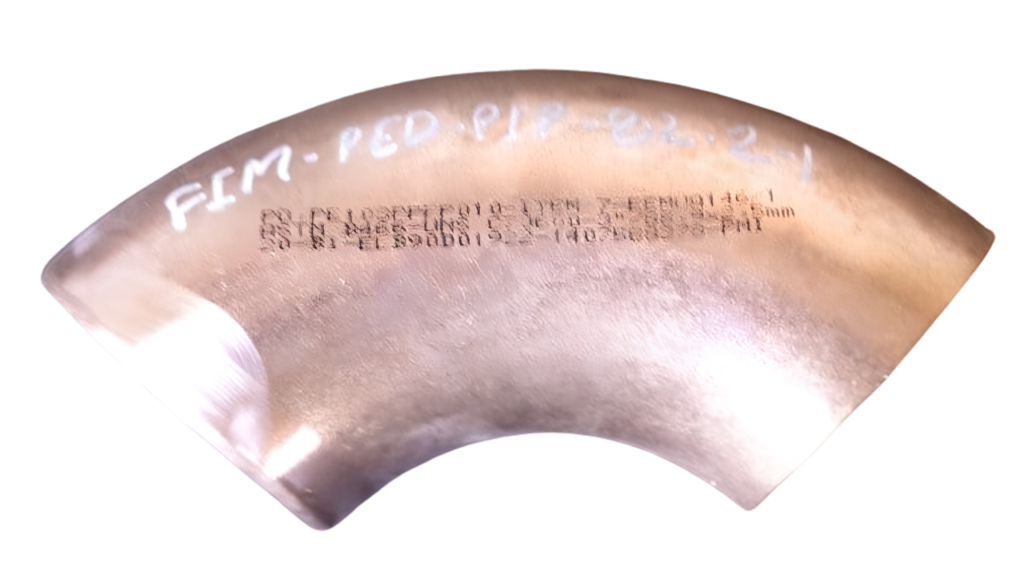
Copper-nickel performance depends on alloy grade, water chemistry, velocity, aeration, and deposits. Common grades include 90-10 Cu-Ni and 70-30 Cu-Ni. ASTM B111/B111M includes copper and copper-alloy seamless condenser tubes and ferrule stock, including several copper-nickel grades, while ASTM B466/B466M covers seamless copper-nickel pipe and tube. Copper alloys can also be used in heat-transfer equipment, valves, fittings, and selected piping services. However, check compatibility with sulfur-containing environments, ammonia, high-velocity flow, deposits, and dissimilar metals rather than assuming all copper alloys have the same resistance.
Nickel and Nickel Alloys
Select nickel alloys when a process requires combinations of corrosion resistance, elevated-temperature strength, or resistance to specific aggressive chemicals. The family includes commercially pure nickel, nickel-copper alloys such as Monel 400, nickel-chromium alloys, and nickel-chromium-molybdenum alloys such as Hastelloy-type materials.
Nickel alloys are not interchangeable. Alloy selection must match the exact chemical environment and the applicable product specification. For example, ASTM B165-26 covers seamless nickel-copper alloy pipe and tube UNS N04400, and ASTM B622-26 covers seamless nickel and nickel-cobalt alloy pipe and tube. ASTM B163-26 covers seamless nickel and nickel-alloy condenser and heat-exchanger tubes.
Nickel alloys may be used for process piping, valves, heat exchangers and other pressure-containing components. They may also be used as cladding or corrosion-resistant overlays where the design and manufacturing procedure specifically permit them. High-temperature turbine components are a separate application category and should not be treated as evidence that every nickel alloy is suitable for high-pressure steam piping.
Aluminum and Aluminum Alloys
Aluminum alloys offer low density, good thermal conductivity, ease of fabrication for many products, and useful atmospheric corrosion resistance. They can be attractive where weight reduction is important.
Aluminum is not a universal process-piping material. Chemical compatibility, temperature-dependent strength, galvanic coupling, erosion, and specific process chemistry can limit its suitability. No single temperature, such as 175°C, makes every aluminum alloy suddenly unsuitable; allowable stress and strength depend on the alloy, temper, product form, temperature, and the governing design code.
ASTM B241/B241M covers aluminum and aluminum-alloy seamless pipe and seamless extruded tube for pressure applications. ASTM B234/B234M covers drawn seamless aluminum-alloy tubes for surface condensers, evaporators, and heat exchangers.
Aluminum is also widely used for external jacketing/cladding of insulated systems, but the jacket’s purpose and design should be distinguished from pressure-containing process piping. When aluminum is connected to a more noble metal in an electrolyte, galvanic corrosion can occur; isolation, drainage, coating, and material-selection controls may therefore be required.
Titanium and Titanium Alloys
Titanium combines a high strength-to-weight ratio with a highly adherent passive oxide film that can provide excellent corrosion resistance in many environments. Titanium Grade 2 is a common commercially pure grade for corrosion-resistant applications, while Grade 5 (Ti-6Al-4V) is a widely used alpha-beta alloy for mechanical applications.
Titanium performs well in selected chloride-containing, seawater, and oxidizing environments, but resistance depends on chemistry. Evaluate nitric acid service using the actual concentration, temperature, contaminants, and alloy condition rather than applying a blanket rule that titanium is always suitable.
ASTM B861-24 covers seamless titanium and titanium-alloy pipe, ASTM B862-23 covers welded titanium and titanium-alloy pipe, and ASTM B338-17(2026) covers seamless and welded titanium and titanium-alloy tubes for condensers and heat exchangers.
Titanium welding requires strict control of shielding and contamination. The molten weld pool and hot metal must be protected from atmospheric oxygen and nitrogen, normally by suitable inert-gas shielding and trailing/backup protection appropriate to the joint. Simply saying that an “inert atmosphere” is required is incomplete; the welding procedure, joint preparation, shielding, purge quality, heat input, and acceptance requirements must be controlled.
Some titanium alloys lose useful strength as temperature rises, but the temperature limit depends on the alloy and design. Do not use a universal statement such as “titanium starts losing strength above 400°C” as a design criterion.
Zirconium and Zirconium Alloys
Zirconium and zirconium alloys are specialized corrosion-resistant materials used where their chemical resistance provides a strong lifecycle advantage. They are particularly associated with demanding chemical-process applications.
Zirconium is not resistant to every aggressive chemical. Fluoride-containing environments are a major exception, and service chemistry, temperature, concentration, and contaminants must be checked carefully. Material selection should therefore be based on verified corrosion data and the exact service rather than the general statement that zirconium is suitable for all strong acids and alkalis.
ASTM B658/B658M covers seamless and welded zirconium and zirconium-alloy pipe; ASTM also lists B653/B653M for zirconium welding fittings. The ASTM standards listing currently shows B658/B658M-11(2025) and B653/B653M-11(2025) as active listings.
Quick Comparison for Process Piping
Quick Comparison for Process Piping
Non-Ferrous Material Selection, Advantages, Limitations & Applications
| Material family | Main advantages | Key limitations / risks | Typical process uses |
|---|---|---|---|
| Copper / Cu alloys | High thermal conductivity; useful marine alloys; good fabricability | Ammonia/sulfur chemistry, erosion, galvanic coupling, alloy-specific corrosion limits | Heat exchangers, condensers, selected water/marine services |
| Nickel / Ni alloys | Excellent resistance in selected severe chemical and high-temperature services | High cost; alloy-specific weldability and corrosion behavior | Chemical process piping, heat exchangers, valves, severe corrosion services |
| Aluminum / Al alloys | Low density; good thermal conductivity; atmospheric resistance | Temperature-dependent strength; galvanic corrosion; chemistry limits | Selected low-weight systems, heat exchangers, external jacketing |
| Titanium / Ti alloys | High strength-to-weight; strong passivity; excellent resistance in many chloride/oxidizing services | Cost; contamination-sensitive welding; chemistry-specific limits | Seawater, heat exchangers, selected chemical process services |
| Zirconium / Zr alloys | Exceptional resistance in selected aggressive chemical environments | Very high cost; fluoride sensitivity; specialized fabrication | Severe chemical-process services |
Galvanic Corrosion: A Critical Non-Ferrous Issue
Galvanic corrosion can occur when dissimilar conductive materials are electrically connected in an electrolyte. The risk depends on the material pair, exposed areas, electrical continuity, electrolyte chemistry, temperature, and geometry.
For example, connecting a non-ferrous alloy directly to carbon steel in wet service can create a galvanic couple. Solutions may include electrical isolation, compatible fasteners, coatings, controlled drainage, sacrificial materials, or a different material combination. The correct mitigation depends on the service and design.
Material selection should therefore consider the complete piping assembly—not only the pipe wall. Flanges, bolts, valves, supports, instruments, heat-exchanger tubes and connected equipment can all participate in a galvanic couple.
Cladding, Lining and Solid-Alloy Construction
Non-ferrous corrosion resistance can sometimes be provided by a solid alloy, cladding, weld overlay, lining or other engineered construction. The choice depends on pressure-boundary requirements, fabrication method, inspection, repair strategy, thermal cycling, and the consequences of local coating or liner failure.
Cladding is not automatically equivalent to solid-alloy construction. The designer must verify the applicable pressure-boundary rules, bond or attachment method, corrosion allowance (where applicable), transition details, weld procedures, and inspection and repair requirements.
Welding and Fabrication Considerations
Non-ferrous alloys can have fabrication requirements that differ significantly from carbon steel. Cleanliness, heat input, filler-metal selection, shielding, joint preparation, distortion control, and contamination prevention can directly affect corrosion resistance and mechanical properties.
Copper and copper alloys can present high heat-conduction challenges. Nickel alloys can be sensitive to heat input, cracking mechanisms, and weld-metal selection depending on the alloy. Aluminum requires control of oxide, hydrogen-related weld defects, and distortion. Titanium requires exceptionally clean surfaces and effective inert-gas shielding. Zirconium requires similarly stringent contamination control.
The welding procedure specification, welder qualification, inspection and examination requirements should be established from the governing construction code, material specification and project requirements rather than from a generic web article.
Inspection, Testing and Documentation
Material certificates should identify the specified grade, product form, heat/lot information, chemical composition and mechanical properties required by the governing material specification. Maintain traceability through fabrication where required by the project quality plan.
Inspection and testing may include dimensional inspection, visual examination, positive material identification where specified, surface examination, radiography or ultrasonic examination, leak/hydrostatic testing and other examinations required by the construction code and project specification.
Non-ferrous materials should also be protected from cross-contamination during storage and fabrication. Reactive or contamination-sensitive alloys may require dedicated or controlled tools, clean work areas, and suitable handling procedures.
Applicable Standards and Codes
The exact standards required depend on the piping class, product form, and governing jurisdiction. The following references are useful starting points for a process-piping material-selection article:
ASME B31.3-2024 — Process Piping: design, materials, fabrication, assembly, erection, examination, inspection and testing of process piping.
ASME B31.1 — Power Piping: applicable where the piping system falls within the power-piping scope. ASME describes B31.1 as covering design, materials, fabrication, erection, test, examination, inspection, operation and maintenance of power-piping systems.
ASTM B111/B111M — copper and copper-alloy seamless condenser tubes and ferrule stock; ASTM B466/B466M — seamless copper-nickel pipe and tube.
ASTM B165 — nickel-copper alloy UNS N04400 seamless pipe and tube; ASTM B622 — seamless nickel and nickel-cobalt alloy pipe and tube; ASTM B163 — nickel and nickel-alloy condenser and heat-exchanger tubes.
ASTM B241/B241M — aluminum and aluminum-alloy seamless pipe and seamless extruded tube; ASTM B234/B234M — aluminum-alloy heat-exchanger and condenser tube.
ASTM B861 — seamless titanium and titanium-alloy pipe; ASTM B862 — welded titanium and titanium-alloy pipe; ASTM B338 — titanium and titanium-alloy condenser and heat-exchanger tube.
ASTM B658/B658M — seamless and welded zirconium and zirconium-alloy pipe.
Always verify the edition specified by the contract, jurisdiction, purchaser, and engineering design basis. A later edition on the standards publisher’s website is not automatically the governing edition for an existing project.
Practical Material-Selection Workflow
- 1. Define the fluid and contaminants.
- 2. Establish design pressure, design temperature, operating range, and transient conditions.
- 3. Identify credible corrosion and degradation mechanisms.
- 4. Shortlist material families and exact alloy grades.
- 5. Check allowable stresses and design rules in the governing code.
- 6. Check product availability, dimensions, fittings, flanges, valves, and welding consumables.
- 7. Evaluate galvanic compatibility with every connected material.
- 8. Define fabrication, welding, heat treatment, and cleaning requirements.
- 9. Define inspection, testing, and material traceability requirements.
- 10. Compare lifecycle cost—not only initial purchase price—and document the final selection.
Common Material-Selection Mistakes
Choosing an alloy because it is described as “corrosion resistant” without checking the exact process chemistry.
Treating all nickel alloys, titanium grades, or copper alloys as interchangeable.
Using a single temperature limit for an entire alloy family.
Ignoring galvanic couples at flanges, valves, instruments, and supports.
Assuming cladding has the same design basis as solid alloy.
Selecting a material before confirming the governing piping code and product specification.
Using a corrosion-rate table without considering velocity, deposits, contaminants, oxygen level, and temperature.
Failing to maintain heat/lot traceability and contamination controls during fabrication.
Engineering Takeaway
The best non-ferrous material is not necessarily the most corrosion-resistant or the most expensive alloy. It is the material that satisfies the complete design basis with an acceptable combination of corrosion resistance, mechanical performance, temperature capability, fabrication reliability, inspection requirements, availability, and lifecycle cost.
For process piping, use this article as an engineering screening and decision-support guide—not as a substitute for the governing code, material specification, corrosion assessment, project design basis, or qualified engineering review.
Frequently Asked Questions
Q1. What are the main non-ferrous materials used in process piping?
Important families include copper and copper alloys, nickel and nickel alloys, aluminum and aluminum alloys, titanium and titanium alloys, and zirconium and zirconium alloys.
Q2. Is stainless steel a non-ferrous material?
No. Stainless steel is an iron-based alloy, so it is classified as ferrous even though it can contain significant chromium, nickel, and other alloying elements.
Q3. Which non-ferrous material is best for seawater piping?
There is no universal winner. Copper-nickel, titanium, and selected other alloys can be suitable depending on velocity, temperature, biofouling, chlorination, oxygen level, crevices, and mechanical requirements.
Q4. Is titanium resistant to nitric acid?
Titanium can perform well in many nitric acid environments, but suitability depends on concentration, temperature, contaminants, and alloy condition. The exact service must be checked.
Q5. Can aluminum be used for pressure process piping?
Yes, where the exact alloy, product form, design temperature, pressure, chemistry, and governing code permit it. ASTM B241/B241M is one relevant product specification.
Q6. Can non-ferrous metals suffer galvanic corrosion?
Yes. Dissimilar-metal contact in an electrolyte can create galvanic corrosion. Assess the entire piping assembly.
Q7. Why are nickel alloys expensive?
They contain alloying elements and manufacturing controls that provide specific corrosion or high-temperature performance. Lifecycle cost can nevertheless justify their use in severe service.
Q8. What is the key standard for process piping?
ASME B31.3 is a principal code for process piping. ASME identifies the 2024 edition as the current edition in the sources reviewed for this article.
Q9. Does a newer code edition automatically apply to an old project?
No. The contract, jurisdiction, design basis, and purchaser requirements determine the governing edition. Verify the project documents.
Q10. What information is needed before selecting a non-ferrous piping material?
At minimum: fluid composition, concentration, pressure, temperature, phase, velocity, contaminants, water content, oxygen level, cyclic conditions, connected materials, fabrication requirements, and governing code.
Test yourself | Non-Ferrous Materials in Piping Quiz
Non-Ferrous Materials in Piping Quiz
Provided by AIenginear
1. What is the fundamental metallurgical distinction of non-ferrous piping materials?
Editorial and Engineering Notes
Standards are engineering references, not reproduced. Always verify the project-adopted edition and the exact product specification before procurement or design release.